

In an interview published October 19, 2026, Tobe Nwigwe and Fat Nwigwe talked with The Breakfast Club about working together in the studio. Fat described how the intensity he brought from his football background could make collaboration difficult. Tobe explained that he had learned to change his approach. They also described the progress they had made.
There is something useful in hearing people talk about an adjustment they have already made. You can care deeply about the work and still need to learn how to work with the person beside you.
Most of us have been in some version of that room. A shared project is running late. A household decision keeps getting postponed. You have a clear idea of what needs to happen, and you want to get moving. By the time you explain it for the third time, your voice sounds more like a set of instructions than an invitation.
You may be thinking about the result. The other person is also experiencing how you are speaking to them.
A different place to start
Here is a hypothetical coaching example, not a real Pensy conversation or an account of the Nwigwes using it.
Imagine telling Pensy during a session: “I’m trying to get us moving, but my partner says I sound like I’m giving orders.”
A useful coaching response could begin with two questions: What are you hoping you will agree on? What has your partner actually told you about how you are coming across?
That second question matters. It asks you to listen to their feedback rather than assume you know what they feel.
From there, you could rehearse an opening:
“I’m coming across more forcefully than I mean to. I want us to make this good together. Can I explain what I’m hoping for, and then hear what you think?”
The words should sound like you. The important part is acknowledging your approach and making room for their answer. Then you have to let them answer.
Where coaching fits
An AI assistant can help organize the project or draft a message. General assistants can also remember context and help you reflect. Pensy.AI is built specifically around coaching: noticing patterns, choosing what to work on, practicing a different response and returning to what happened afterward.
You meet Pensy for short sessions at your chosen check-in times. It remembers the goals, relationships and commitments you share. You can leave a note between sessions for the next one, including how the conversation went. That gives you something concrete to work with beyond finding a better opening line. How Pensy works
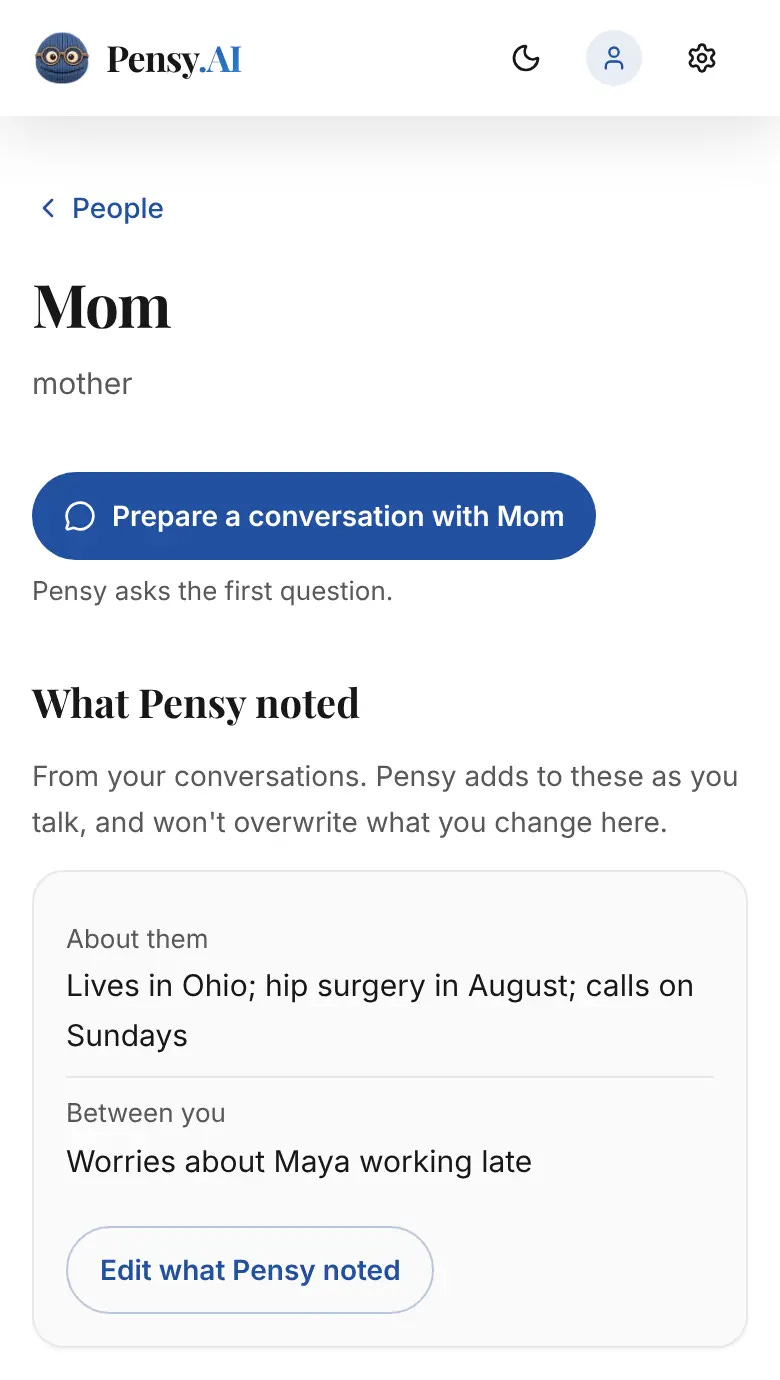
Pensy’s conversation-preparation screen, shown with a fictional sample account. Courtesy of Pensy.AI.
Before your next conversation
Write two sentences:
- The outcome I’m hoping for is…
- The kind of partner, colleague or family member I want to be in this conversation is…
Read them together. Does the way you plan to start make room for both?
Try your opening aloud once. Keep it simple enough that you could actually say it. When the conversation is over, notice what you would repeat and what you would change.
Working well together takes adjustments. Sometimes the most useful one starts with hearing the voice you bring into the room.
Prepare for your next important conversation. Start your first coaching session free with Pensy.AI. No card needed.