
When “I’m Fine” Becomes a Problem
Using AI to Practice the Conversations That Keep Relationships Healthy. AI won’t fix your relationship—but it can help you practice the conversations that do.

In 2026, people are using AI for everything from drafting texts to emotional support—and regulators are starting to notice. Here’s what most couples (and many coaches) miss: the biggest communication failures aren’t the loud fights; they’re the quiet, unspoken needs. This article shows how to use AI to surface what’s unsaid, rehearse hard conversations, and build healthier communication—without outsourcing your humanity.
You don’t lose a relationship because you said the wrong thing once.
Most relationships unravel because you didn’t say the right thing for months (or years)—and by the time you finally speak up, it comes out sideways: as distance, sarcasm, avoidance, “mysterious” burnout, or impulsive choices that shock everyone.
If you coach humans for a living, you’ve seen this pattern up close:
“We never fight” (translation: we avoid reality efficiently).
“I didn’t want to make it a thing” (translation: I trained myself to swallow needs).
“It just happened” (translation: pressure built until the weakest point cracked).
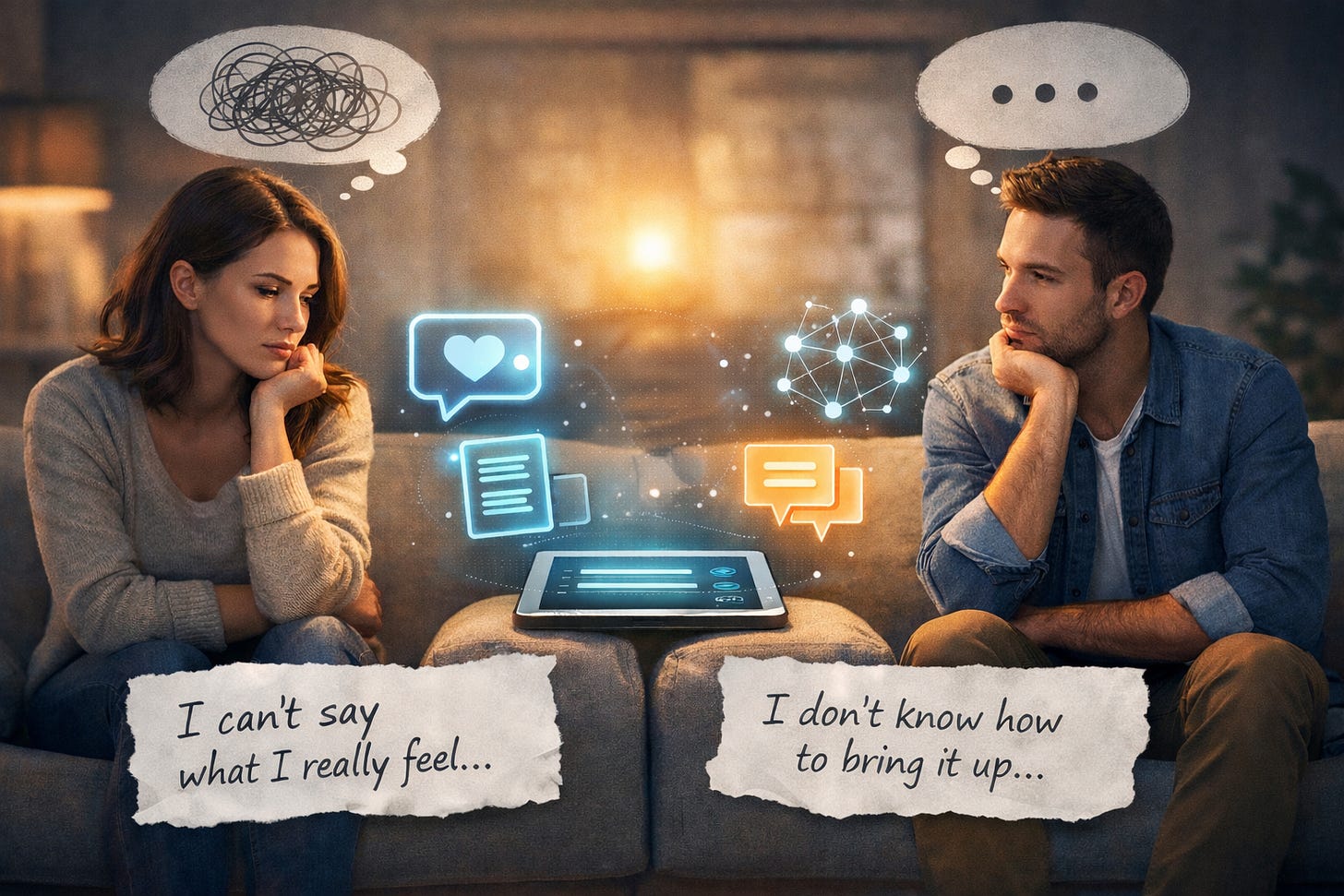
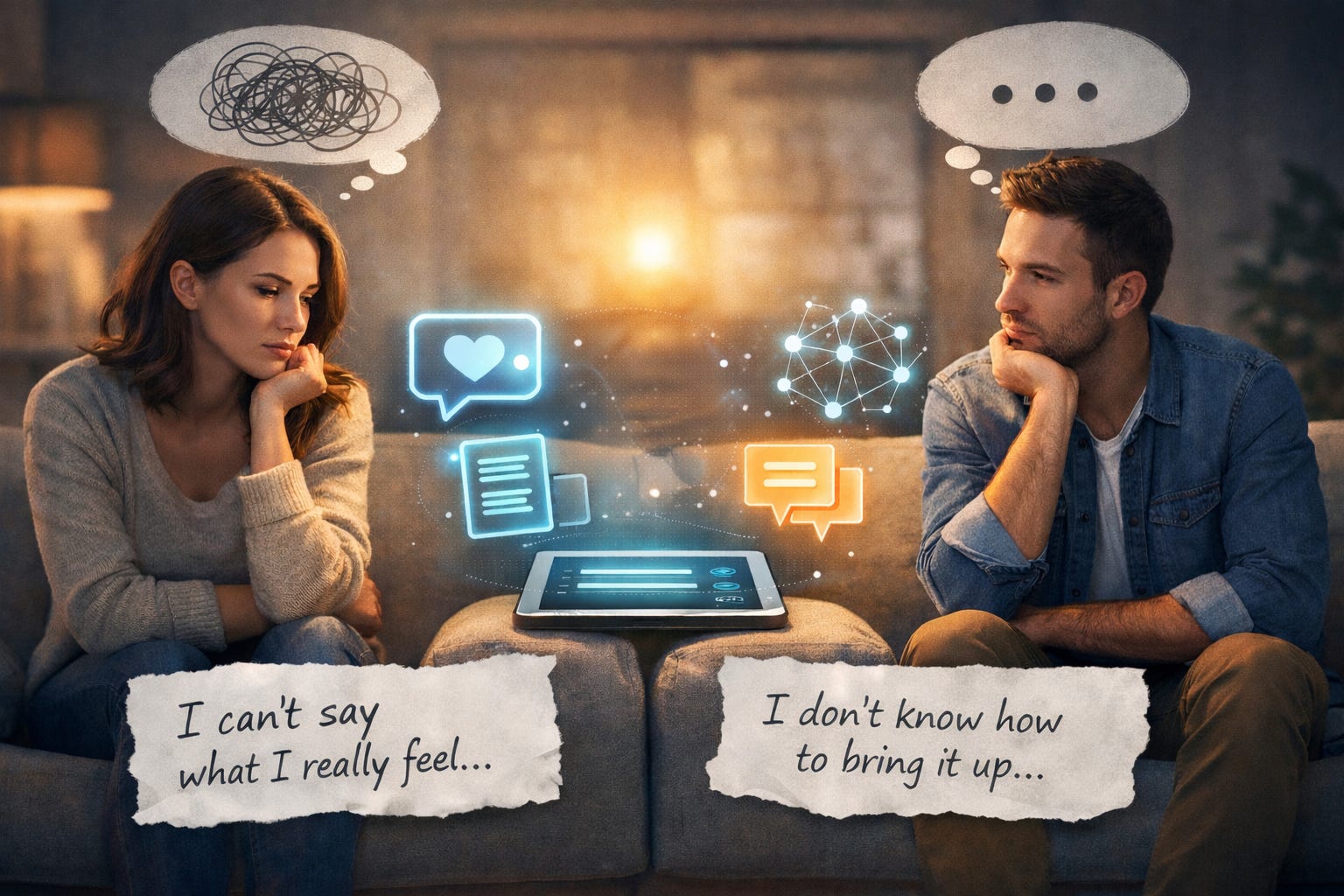
Why this matters more right now than it did even two years ago
Because tools like AI is moving into the most intimate parts of people’s lives.
This week, Meta temporarily suspended teens’ access to its AI “characters” globally while it redesigns those experiences with safety features and parental controls. That’s not a random product tweak—that’s a signal that “AI as a relationship-like presence” has become mainstream enough to trigger serious scrutiny.
And it’s not just teens. Adults are already using tools like Pensy AI as confidants, coaches, and pseudo-partners—sometimes as a bridge to human connection, sometimes as a replacement for it.
So the question for The Future of Life Coaching with AI – Pensy AI Newsletter isn’t “Should people use AI in their personal lives?” They already are.
The better question is: How do we use AI to improve real human communication—without letting it weaken the muscles we actually need?
The quietly costly communication problem: “unsent messages”
Most communication problems aren’t about vocabulary. They’re about risk.
People avoid saying what they mean because they’re trying to avoid one of these outcomes:
rejection
conflict
looking needy
being misunderstood
being “too much”
So they keep the peace… by shrinking. And shrinking works until it doesn’t.
Here’s the part that isn’t widely discussed: when someone consistently edits their real thoughts out of the relationship, they don’t become calmer. They become harder to predict—because their truth has nowhere healthy to go.
That’s where AI can genuinely help, if used well: it gives people a low-stakes rehearsal space to turn vague emotion into clear language.
What research suggests (and what most people miss)
A newer line of research on AI-assisted writing and “AI-mediated communication” shows a real tradeoff: AI can make messages more effective, but it can also raise questions about authenticity and trust if the receiver senses something “generated.”
That’s the needle we have to thread:
Use AI to clarify your intent.
Don’t use AI to hide your intent.
AI should be the gym, not the substitute athlete.
5 practical ways to use AI for better relationship communication
These are coach-friendly, client-friendly, and surprisingly effective.
1) The “translation” prompt (reduce accidental harshness)
When clients say “I was just being honest,” it often means “I was being unclear and sharp.”
Have them paste the message and ask:
Prompt:
“Rewrite this so it’s direct, kind, and specific. Keep my point, remove blame. Give me 3 options: soft, balanced, firm.”
This is especially useful for text-based conflict, where tone gets misread.
2) The “name the need” prompt (get beneath the complaint)
Most complaints are poorly disguised needs.
Prompt:
“Help me identify the unmet need underneath this frustration. What am I asking for, emotionally or practically?”
This moves people from “You never…” to “I need…”
3) The “boundary builder” prompt (stop people-pleasing from becoming resentment)
Boundaries fail when they’re vague or apologetic.
Prompt:
“Turn this into a boundary statement with (1) what I’m noticing, (2) what I need, (3) what I’ll do if it continues—without threats.”
That last part matters: boundaries aren’t punishments, they’re clarity.
4) The “roleplay pushback” prompt (practice staying steady)
People don’t avoid hard conversations because they can’t talk.
They avoid them because they can’t handle the moment the other person reacts.
Prompt:
“Roleplay my partner responding defensively. Help me reply without escalating. Keep me grounded and respectful.”
This is where AI becomes a rehearsal partner—not a relationship partner.
5) The “repair script” prompt (the skill most couples never learn)
The rarest communication skill isn’t vulnerability. It’s repair.
Prompt:
“Write a short repair message that takes ownership, names impact, and proposes a better approach next time. Keep it human.”
Repair prevents small ruptures from becoming permanent stories.
The ethical line: don’t let AI become emotional outsourcing
As AI becomes more “companion-like,” we’re watching governments and institutions tighten their grip on guardrails—especially for minors and emotionally vulnerable users. A bipartisan bill introduced in the U.S. would even ban minors from using certain AI chatbots and require age verification.
Even when we’re working with adults, the coaching ethics are similar:
Three simple rules I recommend to clients
AI can help you prepare, but you should deliver the message.
If you’re using AI to avoid discomfort, you’re training avoidance.
Protect privacy: don’t paste sensitive personal details into tools that aren’t designed for confidential care.
(And if a client is using AI for mental health support as a primary lifeline, that’s a separate conversation—many experts are warning about over-reliance and unclear accountability. )
The coaching opportunity: teach “communication fitness”
For life coaches, this is a moment.
Because most people don’t need more inspirational quotes about communication. They need systems.
AI makes those systems easier to teach:
how to turn emotion into language
how to ask for needs without apologizing for them
how to disagree without disrespect
how to repair quickly and sincerely
The best use of AI in relationships is not “perfect texting.”
It’s helping people say the real thing sooner—before the relationship pays interest on what wasn’t said.
Pensy AI by Pensy Group is a tool to help people communicate better. If you have relationship that you care about and want to be intentional about what you say next, Pensy was made for you.
A simple script that has helped me replace “I’m fine” with something usable:
“Right now I’m feeling ___. I’m not ready to solve it yet, but I do need ___ in the next 24 hours.”
That keeps honesty and safety in the same sentence. If people can’t name the feeling, I’ve found a 0–10 scale works too (“I’m at a 7 and need 20 minutes before we continue”). Small structure prevents emotional shutdown.